The Maya were known not only for their extraordinary architectural and artistic qualities, but also for their advanced economic organization. With a well-structured system of agriculture, trade, crafts, taxation, and other economic activities, the Maya developed a prosperous and sophisticated society.
Agriculture
The main economic activity was agriculture, with crops such as corn, beans and cotton. The cultivated areas had to be sufficient to produce food for the entire population.
The ancient Maya knew several methods for food production. Initially it was believed that they mainly used the technique of shifting cultivation (cut and burn), but today it is thought that they also used other techniques such as intensive cultivation, forest gardens, fundamental techniques for supporting the numerous populations.
Agricultural production was integrated by the use of various plant species typical of the area of Mayan influence such as avocados, anonas, cocoyoles, mamey, pitahayas, sapotes, tubers, cotton, tobacco, rubber, annatto, indigo and resins. Many of these products were prized goods in other areas of Mesoamerica and therefore had great commercial value.
Beekeeping was also practiced to obtain wax and honey.
Trade
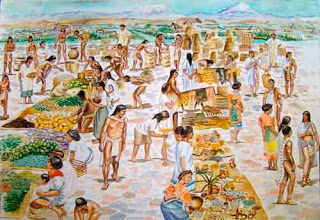
Trade was a fundamental element in the development of the Mayan civilization. Commercial activity was used by the Maya to obtain products that they did not have the ability to produce.
The greatest volume of commercial activity took place in the large markets frequented by merchants from different regions. These markets consisted of large courtyards or squares, where regional products and goods from distant places were exchanged.
Most trade was done through barter, using cocoa beans and sometimes coffee beans.
As for the transportation of goods by land, the Maya did it on foot, loading the goods on their backs.
Finally, for river transportation, they used canoes as a means of river transportation, which they used to cross rivers.
Craftsmanship
The Maya developed a very varied craft activity. Among the artisan activities there were works in:
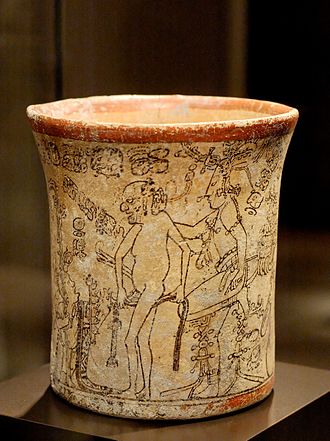
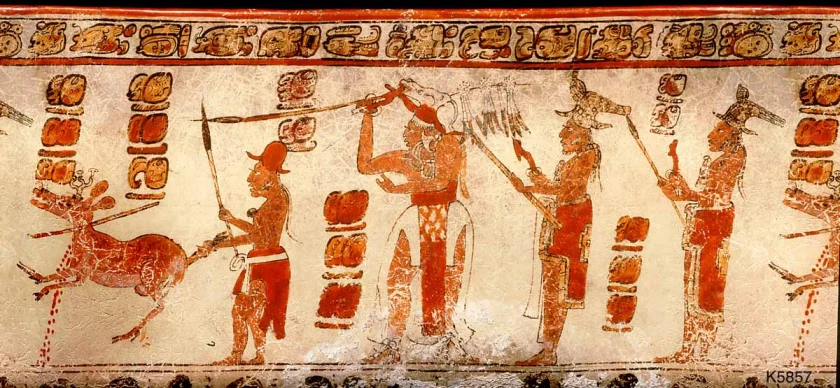
- ceramic, with naturalistic motifs of animals, daily scenes, hunting or war motifs, etc.
- stonework, in which numerous types of rock were used, such as limestone to carve steles, sculptures and building roofs; basalt for making tools; obsidian for knives and jade for jewelry.
- they were skilled carpenters and exploited the woods to build canoes, weapons of different types, etc.
Mining, breeding and hunting
- Mining: The Maya were also involved in mining, such as gold, silver, copper and jade to create valuable items useful for trade.
- Breeding: The Maya had few domestic animals; dogs were domesticated starting in 3000 BC. and the Muscovy duck from the Late Postclassic. Ocellated turkeys were used as slaughter animals; dogs were used for hunting.
- Hunting: both to supplement food and for trade, hunting and fishing trips were organised. Both were communal, had a symbolic and religious meaning. The products obtained, after the gift, were distributed in the community.
The tribute
A very important element of the economy was tribute, which forced agricultural workers, fishermen, artisans and merchants to hand over part of their production or labor to the political and priestly elite.