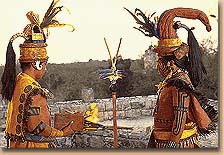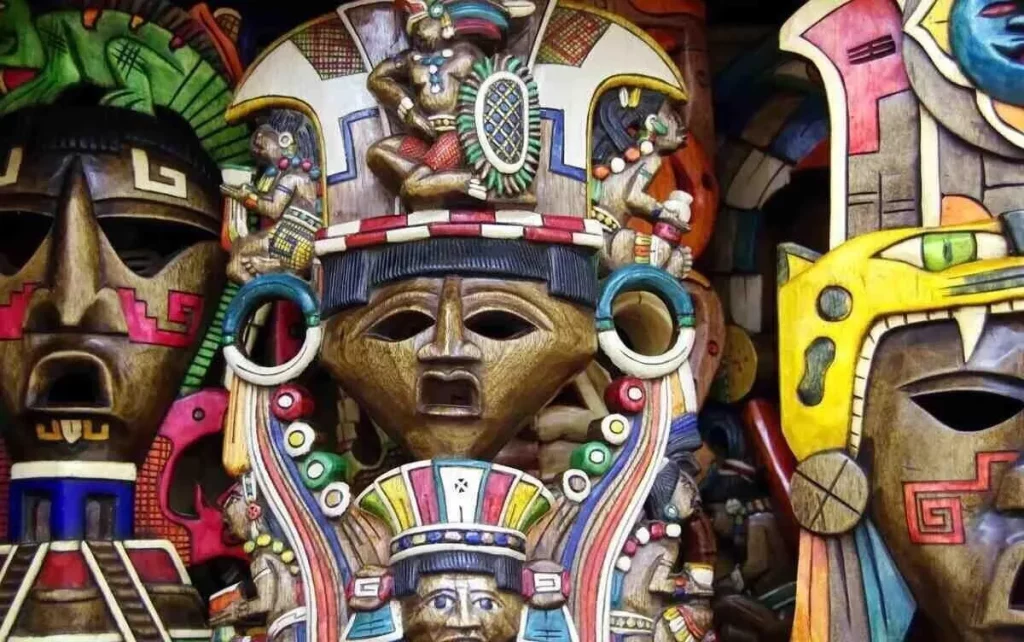
The incredible culture of the Maya was distinguished by its highly developed writing systems, complex numerical calculations, and refined use of the calendar. Their art and architecture are extraordinary, with impressive pyramids and temples that still capture the imagination of visitors today. The Mayan civilization has left an indelible mark on history and art, demonstrating their remarkable skill and creativity.
Writing system
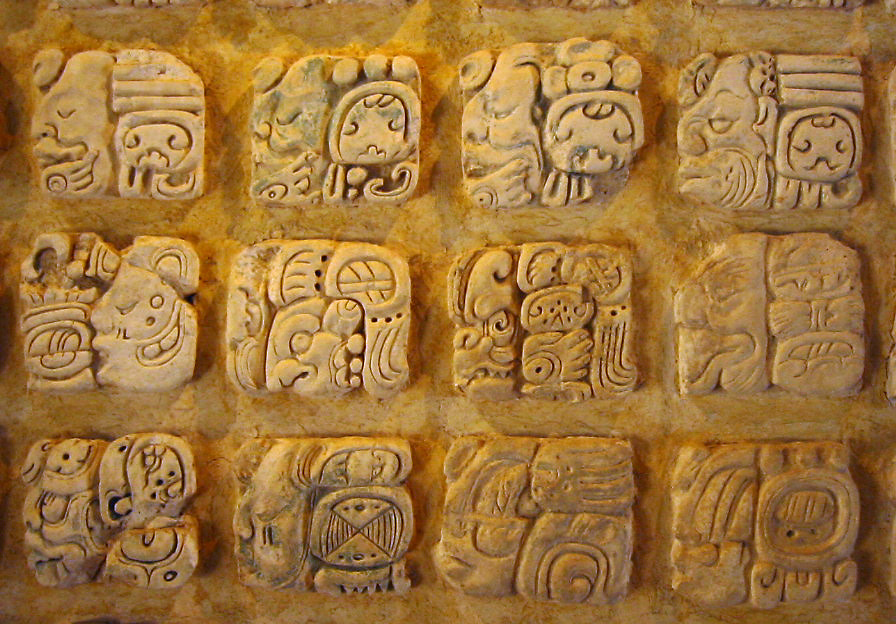
That of the Maya was the only complete writing system among pre-Columbian cultures. This writing born in 300 AD. it is not alphabetical, but phonetic and hieroglyphic, composed of signs carved in stone, called glyphs. Their alphabet, based on a real syntax complete with syllabary, punctuation and spelling, was partially codified by scholars around the 1950s, but still today it has not been completely translated. The inscriptions are composed of rows of signs arranged in vertical columns that must be read from top to bottom. Among the pre-Columbian writing systems, the Mayan one most closely represents the spoken language.
Calculation

The Mayan numbering system was based on just three symbols: a stylized shell for zero, a dot for one, and a bar for five. The system was, in fact, vigesimal (based on 20 instead of 10 as we do) and the numbers were drawn vertically. The hallmark of Mayan mathematics, however, was the “zero principle.”
The figures, in addition to being expressed in usual numbers, were deified. The sacred number was four, which symbolized the 4 cardinal points, the 4 seasons and the 4 ages of the sun, previous to the one in which they were living.
Calendar
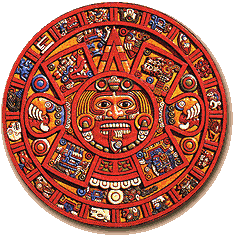
The calendar represents another achievement of Mayan ingenuity. The Mayans believed that events repeated themselves in calculable cycles and therefore those who possessed the ability to develop the calendar were also able to predict and, perhaps, prevent. For the Maya, days were gods: they had their own name and number; they distinguished the lucky days from the unlucky ones and there were even periods in which all activity was stopped. The Maya knew two calendars: the first, which included 260 days and determined the ceremonial life, was displayed in two wheels, of which the innermost showed 13 months, the other 20 monthly days. The second, called HAAB, was made up of 365 days, divided into 18 months of 20 days each, plus the 5 days defined as inauspicious; it was displayed in a large wheel.
Architecture
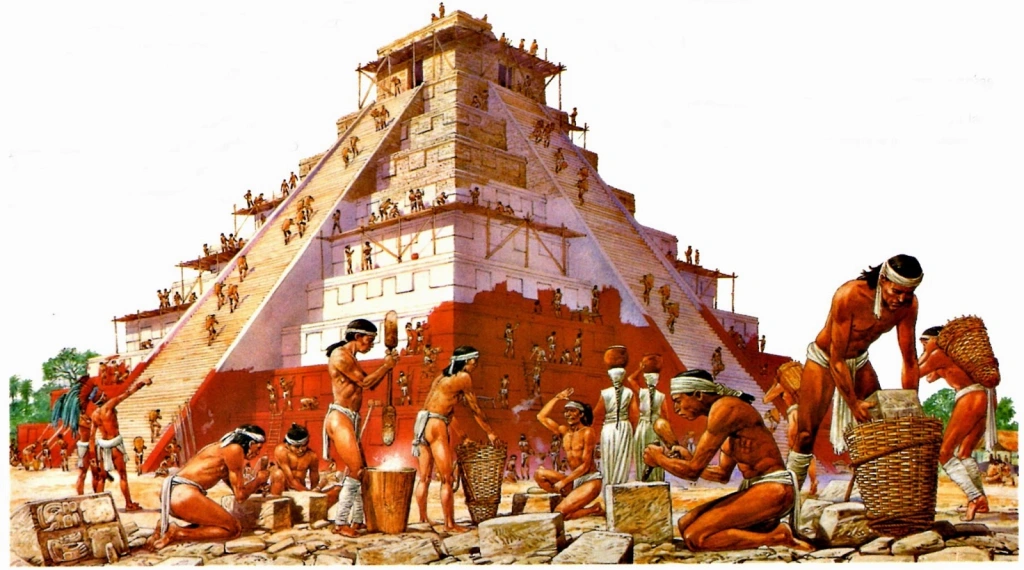
Mayan architecture is one of the most fascinating and mysterious expressions of Mesoamerican culture. The ancient Maya built imposing and complex cities in the jungle, adapting to the geographical and climatic variety of the territory. Their works reflect their religious beliefs, their social and political organization, their artistic creativity.
Mayan cities consisted of large plazas surrounded by ceremonial, government, and residential buildings. Very important among these are the stepped pyramids, which housed the temples dedicated to deities and sovereigns. The pyramids were decorated with carvings, stuccos and paintings representing mythological, historical and astronomical scenes.
Religion
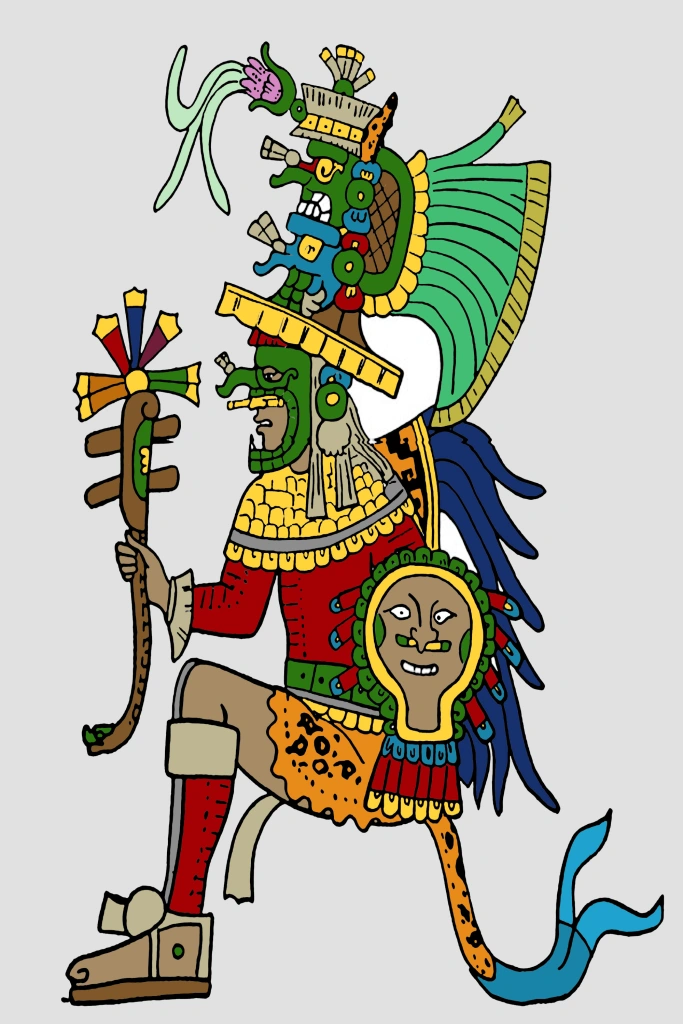
The Mayan religion was a form of polytheism; it was based on a concept of duality, life and death, day and night, male and female, represented two indivisible aspects. There were many religious rites (such as ball games) and different types of offerings that were made, to which human sacrifices were added in the post-classical period. The Mayans believed that after death, life continued in another world. For this reason they placed various objects next to the deceased, in the belief that they would be useful in the afterlife. The deities venerated by the Maya were: Kinich Ahau, the powerful sun god; Ah Mun, the young maize god; Curved-tusked Chiac, master of the rain; or Ah Puch, the “lord of Death”.
Astronomy
With simple instruments, the ancient Maya predicted eclipses, the rising and setting of the sun, and demonstrated in-depth astronomical knowledge of the cycles of the moon and the stars. For the Maya, these celestial elements represented divinities. The North Star and other celestial bodies were used as a guide for the orientation of buildings. The Maya had their own zodiac, made up of thirteen castes; the first three signs seem to have been: the scorpion, the turtle and the rattlesnake.